

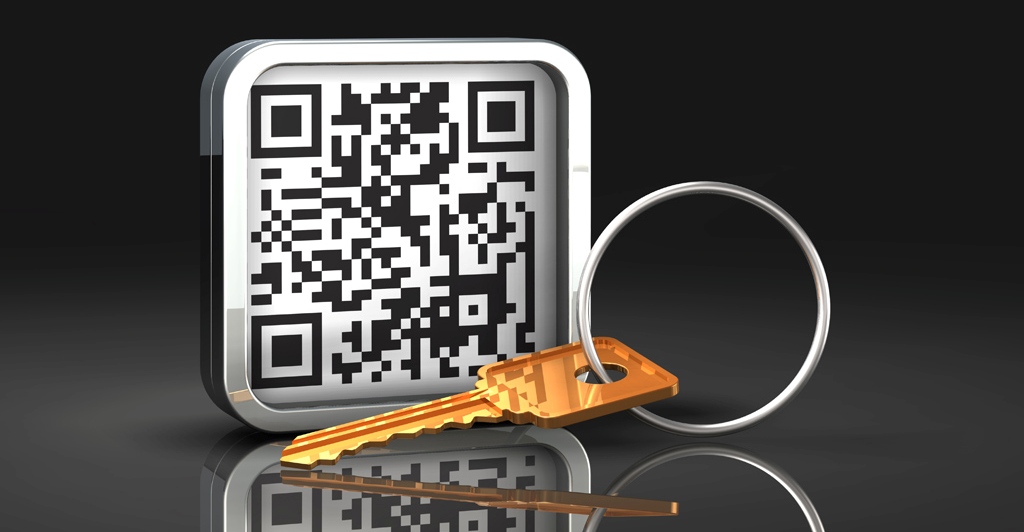
 A hybrid of smart parking. This is what the service of smart parking with identification QR code is about. It was created by the Department of Energy and Information in Pisa which recalls the recognition systems of car sharing. “The initiative is part of a broader project SMARTY (SMArt Transport for sustainable citY) of the Region of Tuscany that wants to promote integration of innovative transportation systems with the more traditional ones,” explains Professor Francesco Marcelloni. The smart parking services, intended for easy management of unguarded car parks, appears to be a solution that is cheaper and more compatible with the environment compared to traditional devices: “The sensors informing about the occupied parking spaces are already in place. However, they need to be installed on the road surface and their purchase, installation and maintenance costs are high.” This solution in turn intends “placing a QR code on the sidewalk, next to the parking space so that the driver could scan it with the app on their smartphone and notify on the status of the space.” So those who occupy or leave a car park space send a signal to other drivers who avoid losing time and emit air polluting substances when looking for a free space. They can also easily pay the ticket, by means of the same application or by credit card through a special platform. Those who do not have access to the Internet, can also scan the QR code and after connecting the device, they can send the data to the central system.
The monitoring of car park areas also includes a system of booking and payment recognition: “The person who controls the parking spaces (a traffic warden or a traffic officer) has a similar device to that of the user: upon scanning the QR code, the central system informs about the payment. If the ticket has not been paid, the auxiliary staff receive a warning signal which in turn needs their confirmation. The user has 24 hours to pay for the parking space, otherwise he will be subject to a fine.”
On the one hand, such a solution makes the user to the key player in the management of city car parks, and on the other hand, it allows for automation of the control and payment of spaces entailing considerable savings for the municipality funds. Despite the fact that “the complete development and the application tests carried out in a small experiment on the guarded car parks of the Department of Energy and Information in Pisa,” it has not been extended to the city level. However, possible applications are numerous: “It can be used in the hospital environment to control the spaces or to allow booking for those who arrive.” It does not overlook the potential for monitoring of air polluting substances.
Thus the next challenge is to enter into new agreements with the local administrations to install the system. And even this could be changed: “Probably we will soon have new more accurate forms of identification, we are considering the GPS coordinates.”

Per ricevere quotidianamente i nostri aggiornamenti su energia e transizione ecologica, basta iscriversi alla nostra newsletter gratuita
e riproduzione totale o parziale in qualunque formato degli articoli presenti sul sito.