
Europe’s energy transition is being decided on the ground of pragmatism. Between the decision-making tables of Brussels and local realities, the climate challenge is no longer just a matter of idealistic targets, but of infrastructure: producing more clean energy is not enough; we need a smart grid capable of integrating it and a market that does not penalize the most vulnerable social groups. From delays in geothermal energy and the potential of biomethane to the thorny issues of the “green homes” directive and energy poverty, the knots to untangle are complex.
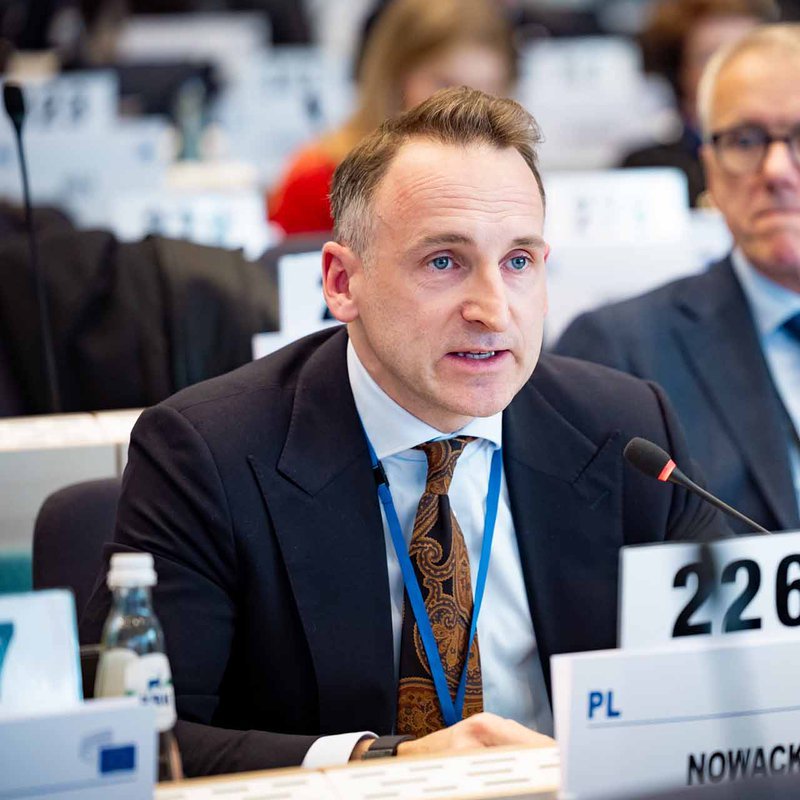
To understand where the Union is heading, we analyzed the stance of the EESC (European Economic and Social Committee) with Marcin Nowacki, President of the Section for Transport, Energy, Infrastructure and the Information Society (TEN) of the EESC.
To speak of an energy crisis means addressing both a contingent problem and an underlying structural issue, building a capacity to be more efficient, therefore wasting less and better using the energy available and the capacity to generate it. All this implies a vision that Europe seems to have in part in the various packages dedicated to network resilience but which then seems to slide on more local issues.
For example, having more networks isn’t enough to make them more efficient; they also need to be commensurate with their actual use by building better where and where needed, and perhaps they need to be smarter, so as to easily allow attacks from alternative sources on the network. Without looking too far I think of biomethane. If each EU agricultural area could produce networking its own biomethane wouldn’t we be giving ourselves a major sigh of relief about the gas resource? We see in Italy connection difficulties and also the difficulty of doing business if the initial costs are not covered by the public. How are you orienting yourself on this?
The EESC agrees that expanding grids alone is not enough. Europe should first optimise existing infrastructure through greater efficiency, flexibility and digitalisation, in line with national energy and climate plans.
This also means, smart grids, including real-time monitoring, advanced forecasting and interoperable data systems, particularly at distribution level where most renewable energy is connected.
The EESC also sees decentralised generation, energy communities, storage and energy self-consumption as key to reducing grid pressure while improving resilience and public support for the energy transition.
In addition, it stresses the need to better align renewable energy and grid planning, treating grid development and climate protection as overriding public interests.
With technological neutrality in mind, biomethane is identified as an important contributor to renewable gas supply, the circular economy and regional development, especially through the use of agricultural residues and by-products.
To overcome barriers such as grid connection difficulties and high upfront costs, the EESC calls for stronger public investment and a market design better suited to a renewable-based energy system.
Public investment in energy infrastructure as part of the solution to climate issues | EESC
REPowerEU: Joint European Action for more affordable, secure and sustainable energy | EESC
Is Europe aiming to use all the energy resources it has or is it fossilizing on some exclusive sources? For example, I wonder: the slow growth of geothermal energy is due to initial costs, but given that it would then be a zero-cost energy source, wouldn’t it make more sense for a state, a Europe, to protect and guarantee this form of exploratory research, also useful for cooling and heating homes, which is currently a major cause of pollution?
The EESC supports technological neutrality, meaning Europe should not rely on only a limited number of energy technologies but should make use of all viable renewable and low-carbon energy sources.
In this context, the EESC has highlighted geothermal energy as an important but still underdeveloped resource with significant untapped potential in Europe. Already in 2024 the Committee has called for a dedicated European strategy on geothermal energy to better harness its benefits. Now, in 2026, we are hoping to see this strategy soon.
Geothermal energy can strengthen Europe’s strategic autonomy and energy security because it provides a constant and reliable source of heat and electricity that is not dependent on weather conditions. It can also support district heating, water heating, industrial processes and energy storage.
The EESC recognises that high upfront investment costs remain one of the main barriers to geothermal development. For this reason, national governments and the EU need to provide funding, incentives and risk-sharing mechanisms to attract investment and reduce the risks linked to exploration and infrastructure development.
At the same time, the Committee stresses that environmental impacts and local concerns must be properly assessed through strong involvement of local communities in order to increase public acceptance.
The potential of geothermal energy for the green transition | EESC
Remaining on homes, the phenomenon of energy poverty is growing. Here too, attempts are being made to implement economic compendium measures of “energy quality,” but little is being done to address the impact that can be had with a structural approach. The example, even a negative one, of Italy with the superbonus showed how people can be pushed into action if investment adjustment spending is alleviated. I wonder if this idea could have been grasped by making states the Escos of private individuals, thus pushing for an adaptation of private infrastructure (appreciations calmed down, otherwise the speculation that has occurred in Italy will repeat itself) whose first economic returns in the sense of savings go to the states themselves?
Given the way the green housing regulation is structured, which partially exempts public infrastructure, doesn’t it risk excluding the public housing units that most need upgrading?
Housing affordability requires a stronger investment framework rather than additional regulation. The primary role of the European Union should be to improve access to financing, facilitate private investment and promote the exchange of best practices among Member States, particularly in spatial planning, land availability and faster, more efficient permitting procedures. Removing administrative barriers is one of the most effective ways to increase housing supply while reducing investment costs and project delays.
Marcin Nowacki underlines that rising environmental and technical standards have also significantly increased the costs of constructing and renovating residential buildings. While decarbonisation remains an important objective, environmental ambitions must be implemented in a technologically neutral and economically proportionate manner to preserve housing affordability. Future legislation should systematically assess its cumulative impact on construction costs and investment viability.
The Committee stresses that addressing the housing crisis requires a balanced approach combining sustainability, affordability and economic competitiveness. Mr Nowacki also stresses that the ecological transition should not undermine access to housing or disproportionately increase costs for households. The costs of decarbonisation should therefore be shared fairly between public authorities, property owners and tenants, while avoiding excessive regulatory burdens that discourage investment.
According to Mr. Nowacki’s perspectives the access to finance remains one of the principal barriers to housing investment and renovation. EU financial instruments should increasingly focus on reducing up-front investment costs through guarantees, blended finance, revolving funds and advance financing mechanisms, enabling households, housing associations and private investors to undertake renovation projects without excessive capital constraints.
The Committee supports expanding the use of EU financial instruments, including the Social Climate Fund, the Just Transition Fund and the European Social Fund Plus, while ensuring that these resources leverage substantially larger volumes of private capital rather than replacing market financing.
Public-private partnerships, institutional investors and limited-profit housing models should play a greater role in increasing the supply of affordable housing. Stable regulatory frameworks, predictable investment conditions and efficient administrative procedures are essential to mobilise long-term private investment in both new construction and large-scale renovation.
Revision of the energy performance of buildings directive | EESC
Crises do not expect otherwise they would not be crises but structural problems. Perhaps it is not appropriate to approach what is happening with respect to energy in Europe with a new mindset? In part the green deal seemed to have seen this scenario in perspective but then I sleep important steps backwards were taken. When you settle for the status quo you can’t really change
As long as the balance is between existing economy and new environmental targets and not new economy adjustment to it with a total ecological transition, do you not think it is doomed to fail?
The European Economic and Social Committee has long argued that real energy security comes from energy independence, and energy independence comes from locally produced energy. This approach has increasingly been reflected in EU policy initiatives such as REPowerEU and more recently AccelerateEU.
However, achieving this transformation requires more than renewable deployment alone. Europe also needs a new energy market design capable of delivering a genuine Energy Union, ensuring solidarity, resilience and affordability across Member States.
At the same time, energy infrastructure planning must evolve to accommodate decentralised energy production and weather-dependent renewables, including stronger grids, storage capacity and interconnections.
The transition must also include realistic and viable decarbonisation pathways for energy-intensive industries, ensuring both affordability of energy supply and the long-term competitiveness of European industry. Without this balance, social acceptance and economic stability will be difficult to maintain.
Finally, the transition cannot succeed without recognising the role of active energy citizenship. Citizens must not only be protected from energy poverty and unfair costs, but also empowered to become active participants in the transition, as energy producers, members of energy communities and consumers of clean energy.
In this sense, the ecological transition is not only an environmental project, but also an economic, social and democratic transformation.
Citizens’ Energy Package: citizens’ engagement, energy communities and prosumerism | EESC

Per ricevere quotidianamente i nostri aggiornamenti su energia e transizione ecologica, basta iscriversi alla nostra newsletter gratuita
e riproduzione totale o parziale in qualunque formato degli articoli presenti sul sito.